
Most articles about moving to Valencia from the US stop at the visa. They explain the Non-Lucrative Visa, the Digital Nomad Visa, the FBI background check, and then go quiet — as if your move ends the day you walk through customs at Madrid-Barajas or Valencia-Manises with your TIE appointment booked. The truth is that the move starts on that day. The next twelve months are when the choices you made on paper meet the life you actually have to build for your kids, your spouse, and yourselves.
This is the practical guide — what to ship, what to leave, how to choose the school, where to actually live, how to settle the kids, and what life genuinely feels like in the first year. If you’re still in the research phase weighing whether Valencia is the right city, you might want to start with our Moving to Valencia from the USA 2026 guide, which covers visas, taxes, and the cost-of-living comparison Americans actually feel. This piece picks up where that one leaves off.
Why families specifically thrive in Valencia
Most American families who consider Madrid or Barcelona first, then end up in Valencia, give the same reasons when we ask them six months in. The city is the right size for raising children. Large enough for top-tier international schools and excellent healthcare, small enough that the school run, the grocery store, the pediatrician and the beach all sit within twenty manageable minutes. Crime is low by European standards and almost non-existent by American standards. Children walk to school by age seven. Restaurants welcome them rather than tolerate them. Playgrounds are full until 9pm. The social fabric tilts toward the multigenerational in a way American family life doesn’t.
The deeper appeal — the one that keeps American families in Valencia long after the novelty wears off — is harder to put on a slide. Children play outside until late. Sports run six nights a week and parents are not expected to drive forty minutes between practices. Weekends are about food and family and the beach, not about chaperoning a calendar of structured activities. Around month four or five, most American parents notice that their kids are walking more, complaining less, and going to bed sun-tired. That’s the part nobody puts in the brochure.
The practical logistics: shipping, pets, and what to bring
The single biggest practical decision facing an American family in the months before the move is what to ship, what to sell, and what to buy fresh in Spain. The economics shake out roughly as follows in 2026.
International household shipping from the US to Spain typically costs $6,300 to $15,900 for a family-sized move, depending on volume, port of origin, and service level. A full 20-foot container (FCL) runs around $4,000-$6,000; a 40-foot container runs $5,000-$10,000+ for a typical American family’s belongings. LCL (shared container) shipping is dramatically cheaper at around $1,600-$3,500 for smaller loads but adds 2-4 weeks to transit. Sea freight takes 4 to 12 weeks door-to-door, with most US-to-Valencia shipments arriving in 6-8 weeks via Barcelona or Valencia ports. Air freight is 4-6x more expensive but 5-7 days door-to-door, sensible only for items you need immediately.
Personal household goods are duty-free if you have owned them for at least six months and are bringing them for personal use. This is critical: you’ll need an itemised inventory, proof of ownership for high-value items, and your TIE or residency paperwork. The Spanish customs document is the baja consular, which we coordinate for our clients alongside the shipper.
What’s actually worth shipping: the things that genuinely don’t replace cleanly in Spain. Quality American mattresses if your family is attached to them (Spanish bed sizes are different — 90cm, 140cm, 180cm — so US-size sheets won’t fit but the mattress itself works). Kitchen items that aren’t easily replaced (KitchenAid stand mixers, good knives, cast iron). Bicycles. Sentimental furniture, photographs, kids’ art. Books. Tools. The good winter coats, even if Valencia winters are mild — Spanish stores don’t stock them in the depth Americans expect, and you’ll want them for ski trips and northern Spain.
What’s not worth shipping: large American furniture that won’t fit through Spanish doorways (especially in older central buildings), American appliances (different voltage, 220V vs 110V, and outlets don’t match — adapters work but Spanish-purchased appliances are more practical for a long-term stay), cars (Spanish vehicle import is complex and tax-heavy; buying or leasing locally is almost always simpler), most clothes (Spanish stores carry what you need, and your wardrobe will shift toward Mediterranean weight anyway).
Pets are a separate process and a critical timeline. Your dog or cat needs an ISO-15-digit microchip, a current rabies vaccination administered after the microchip was implanted, and an EU Health Certificate issued by a USDA-accredited veterinarian within 10 days of travel. Pet transport itself runs $1,000-$3,000 per animal depending on breed, crate size, and airline. The Animal Welfare Law in force in Spain since September 2023 also requires dog owners to carry civil liability insurance (€60-€150/year) and complete a free online dog-ownership training course — both easily handled after arrival, but worth being aware of.
For families with multiple children, the realistic timeline is to begin the shipping conversation 6-8 weeks before your intended departure date, get three to five quotes from international movers (companies like Crown Worldwide, Allied Pickfords, International Van Lines, Sirelo-partnered shippers, and others all serve the US-Spain route reliably), and book the container 3-4 weeks before pickup. Sea freight booked late in summer is significantly more expensive than off-season; factor this into your departure timing.
The school decision: where American kids actually thrive
The school choice is the single biggest decision in a family move to Valencia, and the one that shapes everything else — your neighborhood, your routine, your kids’ social network, your integration arc. Valencia gives American families four real options, and the right one depends on your children’s ages, your timeline, and what you want for them.
International schools are the most natural choice for American families targeting curriculum continuity, particularly for older children. The four schools most American families end up at:
American School of Valencia (ASV), located in Puçol about 25 minutes north of central Valencia, follows the American curriculum from preschool through high school, with the IB Diploma offered in the upper grades. It’s an accredited member of NEASC and the only American-curriculum school in the region. Tuition runs roughly €8,000-€14,000 per year per child plus enrolment, transport, and meals — making it the right answer for families who want their children’s American academic trajectory protected, particularly for high schoolers planning US college applications.
Caxton College, also in Puçol, is the largest British international school in the Valencia region (1-18 years), BSO-accredited with the highest “Outstanding” rating, and consistently delivers Sixth Form results that send graduates to Oxford, Imperial College, LSE, and Spanish public universities. The British curriculum (IGCSE/A Levels) works smoothly for US-bound students and superbly for those considering UK universities. Many American families choose Caxton specifically because the academic environment is rigorous without being relentless. Fees run €8,000-€15,000 per year.
Cambridge House British International School in Rocafort, owned by Globeducate, offers the British curriculum closer to central Valencia — a real advantage if you’re commuting into the city for work. Strong reputation, strong sports program, and a more central location than Puçol.
British School of Valencia (BSV) sits centrally in the city, which suits families who want to live in central Valencia rather than the suburbs. Smaller campus, walkable for families in Eixample or Pla del Real, full British curriculum.
Two more worth knowing about: the Lycée Français de Valence for families who want a francophone path, and the Deutsche Schule for German curriculum.
The other two options are Spanish public schools (free, neighborhood-allocated, full Spanish-language immersion — the most powerful integration tool we know for children under ten, who typically become functionally bilingual within a year) and concertado schools (privately run but partly state-funded, modest fees, often with stronger English programs). For younger children whose families are committing to Valencia long-term, the public route is genuinely worth considering, even though most American families initially default to international.
The school admissions calendar in the Comunidad Valenciana is unforgiving — public and concertado applications run through adminova.gva.es in early May for the following September. International schools admit on rolling waiting lists, but the strongest places fill 9-12 months ahead. Our school-finding service is built around these calendars, and we’ve covered the strategic decision underneath the lanes in our family relocation guide for the 2026-2027 school year.
Where American families actually live in Valencia
Choosing the neighborhood is essentially choosing the lifestyle. For American families, the answer almost always comes down to whether you want city life or suburban life — and within each, what kind.
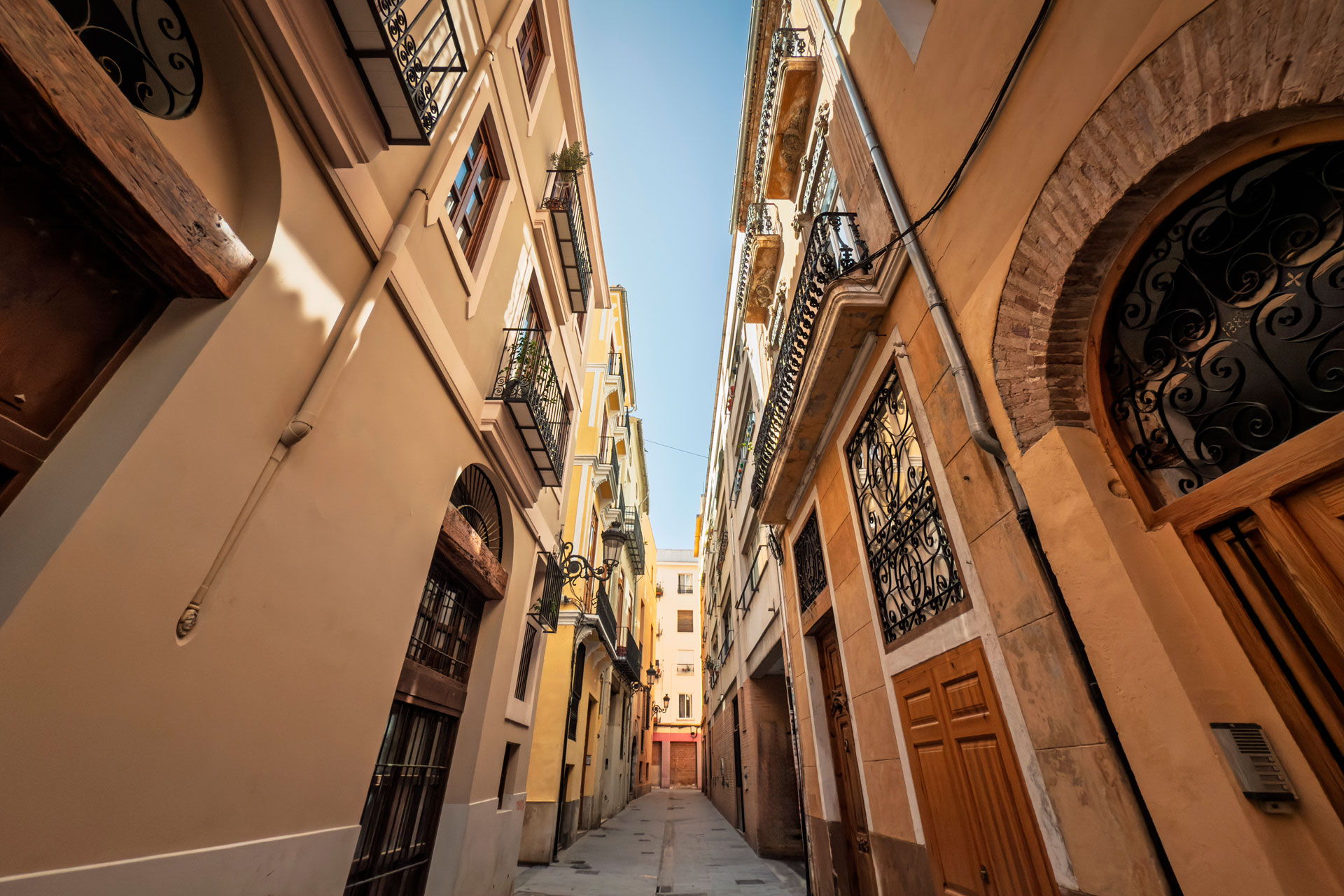
Valencia city center: walkable urban living, European-style. Many American families are initially drawn to central Valencia, imagining it as a Spanish version of Manhattan or Boston. The feel is genuinely different. Ruzafa is Valencia’s artsy, multicultural hub — once working-class, now full of third-wave coffee shops, independent bookstores, yoga studios and organic grocers. It feels like Brooklyn-meets-Echo Park. American families who land here tend to be those who want everything on foot, value diversity and design, and don’t mind apartment living. L’Eixample (Ensanche) and Gran Vía are slightly more polished — early-20th-century buildings with wrought-iron balconies, mature tree-lined avenues, supermarkets and clinics in walking distance. East Coast families relocating from cities like Boston, DC, or Philadelphia often feel most at home here. El Carmen, in the old town, is picturesque but often impractical for families: cobblestones, narrow streets, and few large apartments.
A practical note on city living: Spanish apartments are typically smaller than American families expect, with fewer bathrooms (one or two, not three), often no in-unit laundry dryer, and elevators not guaranteed in older buildings. Central rents for a family-sized three-bedroom apartment in 2026 run €1,500-€2,500 per month; four-bedroom apartments with lifts and parking are rarer and usually exceed €3,000.
The western suburbs: where most American families end up. For families who want space, garden, and easy access to the international schools, the conversation moves to the western residential belt — La Cañada, L’Eliana, Rocafort, Godella, and Campolivar. These are quiet, leafy towns 15-25 minutes from central Valencia by car or metro, with houses, gardens, pools, and the kind of family-friendly residential rhythm that reminds American clients of areas outside Austin, Atlanta, or LA.
L’Eliana is the most family-oriented, with weekend markets, sports infrastructure, bilingual schools, and the kind of town-square community life that suits American families looking for that everyday Mediterranean warmth. Rocafort is more compact and traditional, with discreet villas and proximity to the gated Santa Bárbara community. La Cañada, part of the Paterna municipality, is the closest to the American suburban template — single-family houses with yards, wide streets, pine trees, and outdoor living. Detached homes in these areas rent for €1,800-€3,500+/month; purchase prices typically start around €400,000 and climb above €600,000-€700,000 in the most desirable streets near the international schools.
The gated enclaves: Santa Bárbara and Los Monasterios. Some American families — especially those relocating from gated communities in Florida, California, or Texas — ask specifically for private residential developments with security, community, and shared amenities. In Valencia, that means Santa Bárbara in Rocafort (24/7 security, private roads, a members-only social club, tennis courts, the architecture varying from modern to classic Mediterranean) and Los Monasterios in Puçol (slightly more elevated, sea views, larger plots, distinctly international community, excellent road access to both Valencia and the international schools). Entry-level homes in these enclaves start around €600,000-€700,000; the larger and newer properties regularly exceed €1.2 million. For American families specifically — accustomed to HOA-style community life and prioritising security — these often strike the right balance between privacy and integration. Rentals are limited and start around €3,500/month for mid-size homes.
The first year: what nobody warned us about
The first month is administrative. Empadronamiento at your local town hall, TIE booking at the foreigners’ office, Spanish bank account, utility transfers, SIP healthcare card application, sworn translations of school records, kids’ vaccination schedule alignment to the Spanish calendar. We’ve covered this chain in detail in our 2026 relocation costs and process guide and the most common landmines in our 12 mistakes to avoid article. The right approach is to run these tracks in parallel, not in series, because the chain compounds otherwise — and a family who arrives in August trying to handle this alone consistently loses 6-8 weeks before their kids are in school.
Months two through six are when the move actually happens. The kids start school and you discover, viscerally, what their experience is like. One of you returns to remote work and the other (often) takes the lead on settling. The first social invitations come — usually through school parents, sometimes through neighbors, sometimes through other American families who arrived two years ago. There’s almost always, somewhere in this stretch, a wobble — a Tuesday afternoon where everything feels slightly too foreign and someone in the family quietly wonders what you’ve done. It passes. It always passes. And it passes faster with a network around you, which is the part of our work that’s hardest to value in advance and easiest to value in retrospect.
The cultural adjustments most American families flag, in our experience: groceries are bought daily or every other day, not in $300 weekly hauls. Drivers honk less. Tipping is small (rounding up, not 20%). Doctors give you their cell phone number. Dinner is at 9 or 10pm. Kids stay out until 11 and nobody panics. Eight-year-olds walk to school together without parents. Pharmacies diagnose mild conditions for free. Stores close 2-5pm and you stop fighting it. You will, slowly, stop noticing any of this.
For the kids specifically: the transition arc is real and reasonably predictable. Children under ten typically struggle visibly for 2-3 months, find friends and rhythm by month 4-6, and reach functional bilingualism by month 9-12. Children 10-14 integrate more slowly — often more comfortable in international schools where their academic life is protected while they pick up Spanish socially. Teenagers are the hardest, particularly mid-secondary, and we strongly recommend international schools (IB or British curriculum) for any teenager arriving with academic credit at stake. The work of being a parent in these months is partly translation, partly logistics, partly emotional support, and partly making space for the kids to do the integrating themselves at their own pace.
How we work with American families
We’re an independent, family-run team in Valencia — not an immigration law firm, not a real estate agency, not affiliated with any school or insurance provider, and not taking commissions from sellers, landlords, or any of the schools above. Our clients pay us, which is what keeps our advice independent. For American families, we coordinate the full move: visa strategy with our trusted immigration attorneys (the ones who actually understand FBI apostille timelines), school strategy for whichever lane fits your family (we have ongoing relationships with ASV, Caxton, Cambridge House, BSV, and the major Spanish public and concertado clusters), the housing search with on-the-ground viewings calibrated to your school choice, the administrative chain (NIE, TIE, empadronamiento, SIP card), the coordination with international movers, the cross-border tax specialist introductions, and the soft landing in the first 90 days when most real questions actually arrive. For Americans specifically, the through-line is our centralized visa and housing service, and the broader family service architecture is here.
Start the conversation
If you’re seriously planning a move to Valencia with your family, the most useful thing you can do next is have an honest, no-pressure conversation about your situation — your children’s ages, your timeline, your visa path, your school priorities. We offer that conversation for free, fifteen minutes by video, no pitch.
Book your free 15-minute consultation here →
Valencia is a remarkable place to raise children. The first year is the hardest, the most important, and the most rewarding. Let’s make it as good as the life you’re moving toward.
Frequently Asked Questions
1. How much does it cost to ship our family’s belongings from the US to Spain in 2026? For a family-sized move, expect $6,300-$15,900 depending on volume, US port of origin, and service level. A 40-foot container (FCL) typically runs $5,000-$10,000+; LCL (shared container) is around $1,600-$3,500 for smaller loads. Sea freight takes 4-12 weeks door-to-door, typically 6-8 weeks to Valencia or Barcelona ports. Personal household goods owned more than six months are duty-free, with proper documentation.
2. Can we bring our dog or cat to Valencia? Yes. Your pet needs an ISO-15-digit microchip, a current rabies vaccination given after the microchip was implanted, and an EU Health Certificate issued by a USDA-accredited vet within 10 days of travel. Pet transport itself runs $1,000-$3,000 per animal. Once in Spain, dog owners must also carry civil liability insurance (€60-€150/year) and complete a free online dog-ownership training course under the 2023 Animal Welfare Law.
3. Which international schools do American families actually choose in Valencia? The most common four are the American School of Valencia (ASV) in Puçol (American curriculum + IB), Caxton College in Puçol (British, BSO Outstanding), Cambridge House in Rocafort (British, closer to central Valencia), and British School of Valencia (BSV) in the city center. Fees typically run €7,000-€15,000 per year per child plus enrolment, transport, and meals.
4. How early should we apply to American or British international schools in Valencia? 9-12 months before your intended start date for the strongest schools. Waiting lists are real, particularly at primary level. Mid-year arrivals are possible at most schools, but the best year-group placements require advance planning. For the 2026-2027 school year specifically, see our dedicated guide.
5. Should we ship our American car to Spain? Almost never. Spanish vehicle import is administratively complex and tax-heavy, and most American models aren’t fuel-efficient by Spanish standards. The simpler path is to sell your car in the US, take a taxi-and-public-transit approach for the first 1-2 months in Valencia, and either buy or lease a car locally once you’re settled. European-sized cars are much better suited to Spanish parking realities anyway.
6. What kind of apartment should we rent for our family in central Valencia? For an American family of four, a 110-140m² three-bedroom apartment in central Valencia rents for €1,500-€2,500/month. Four-bedroom apartments are rarer and typically exceed €3,000/month, particularly in Ruzafa, El Pla del Remei, and Pla del Real. Many central buildings lack in-unit laundry dryers, and elevators are not guaranteed in older buildings. We pre-screen and arrange viewings of family-suitable properties as part of our service.
7. Where do American families with school-aged kids typically live? The majority of American families with school-aged children at international schools live in the western suburbs — La Cañada, L’Eliana, Rocafort, Godella, Campolivar — or the northern suburbs near ASV and Caxton (Puçol, Los Monasterios). Detached homes rent for €1,800-€3,500/month; purchases start around €400,000 and climb above €600,000-€700,000 near top schools. Gated communities like Santa Bárbara and Los Monasterios start around €600,000 for entry-level homes.
8. How long does it take a typical American kid to adapt to Valencia? Children under ten typically struggle visibly for 2-3 months, find rhythm by months 4-6, and reach functional bilingualism by month 9-12. Children 10-14 integrate more slowly and often benefit from international schools as a bridge. Teenagers are the hardest, and we strongly recommend international schools (IB or British curriculum) for any teenager arriving with academic credit at stake.
9. Do we need private health insurance for our family or will the SIP card cover us? It depends on your visa. Digital Nomad Visa holders registered as autónomos contribute to Spanish Social Security and the whole family receives the SIP card automatically. Non-Lucrative Visa holders are not automatically eligible and must maintain private insurance — typically $1,100-$2,700 per year for a family with a major Spanish insurer (Sanitas, Adeslas, DKV, ASISA). After 12 continuous months of empadronamiento, NLV holders can apply for the Convenio Especial (€60/month per adult under 65, €157/month over 65) for SIP access.
10. What does Livin’Valencia actually do for an American family relocating? We coordinate the full move — visa strategy with our trusted immigration attorneys (FBI apostille timeline included), school strategy and applications across ASV, Caxton, Cambridge House, BSV and the Spanish public/concertado clusters, housing search with on-the-ground viewings calibrated to your school choice, NIE/TIE/empadronamiento, SIP card setup, utility transfers, cross-border tax specialist introductions, container coordination with international movers, and the first-90-day soft landing. We don’t take commissions from any third party — our clients pay us, and that’s what keeps our advice independent.
Have a question we haven’t covered? Get in touch → — we read every message.
Article updated in May 2026