Buying a luxury property in Valencia rarely starts with the property itself.
It usually starts with a feeling — a sense that the city offers a better balance than where you are today. More space, more light, a slower rhythm, but still connected.
And then, very quickly, the reality becomes more complex.
Valencia is not one market. It is a patchwork of very different neighbourhoods, each with its own logic, its own rhythm, and its own risks. Two streets apart, you can find completely different buildings, communities, and long-term outcomes.
This is where most international buyers hesitate — not because of price, but because it is difficult to read what is actually right.
What “Luxury” Really Means in Valencia
If you are coming from Northern Europe or North America, the first adjustment is this: luxury in Valencia is not always where you expect it to be.
It is not only about square meters or a new building. In many cases, it is about:
- light and orientation
- the quality of the building (often more than the apartment itself)
- the street — sometimes more than the neighbourhood
- and increasingly, access to outdoor space
A beautifully renovated apartment in the wrong building can age poorly.
A slightly imperfect property in the right location can hold its value for years.
Today, the core of the luxury market tends to sit in a relatively defined range — not extreme, but selective. What matters most is not how much you spend, but where and how.
Eixample – Where Buyers Look When They Want to Get It Right
The first place most serious buyers end up considering is Eixample — and more specifically Pla del Remei and Gran Vía.
Not because it is trendy, but because it is reliable.
This is where Valencia feels structured. The streets are wider, the buildings have presence, and the city works in a way that is easy to understand from the outside. You can walk out of your building and immediately know where you are, how things function, and what your daily life will look like.
For many buyers, especially those who are not planning to be here full-time at the beginning, that clarity matters.
But there is something to understand early: not all apartments here are equal.
Behind beautiful façades, you will often find buildings that vary significantly in quality. Some have been carefully maintained. Others have not. Elevators, insulation, community finances — these details matter more than the finishings you see during a visit.
This is not a neighbourhood where you “find a good deal”.
It is a neighbourhood where you position yourself correctly.
Pla del Real – When You Want the City, But Not All of It
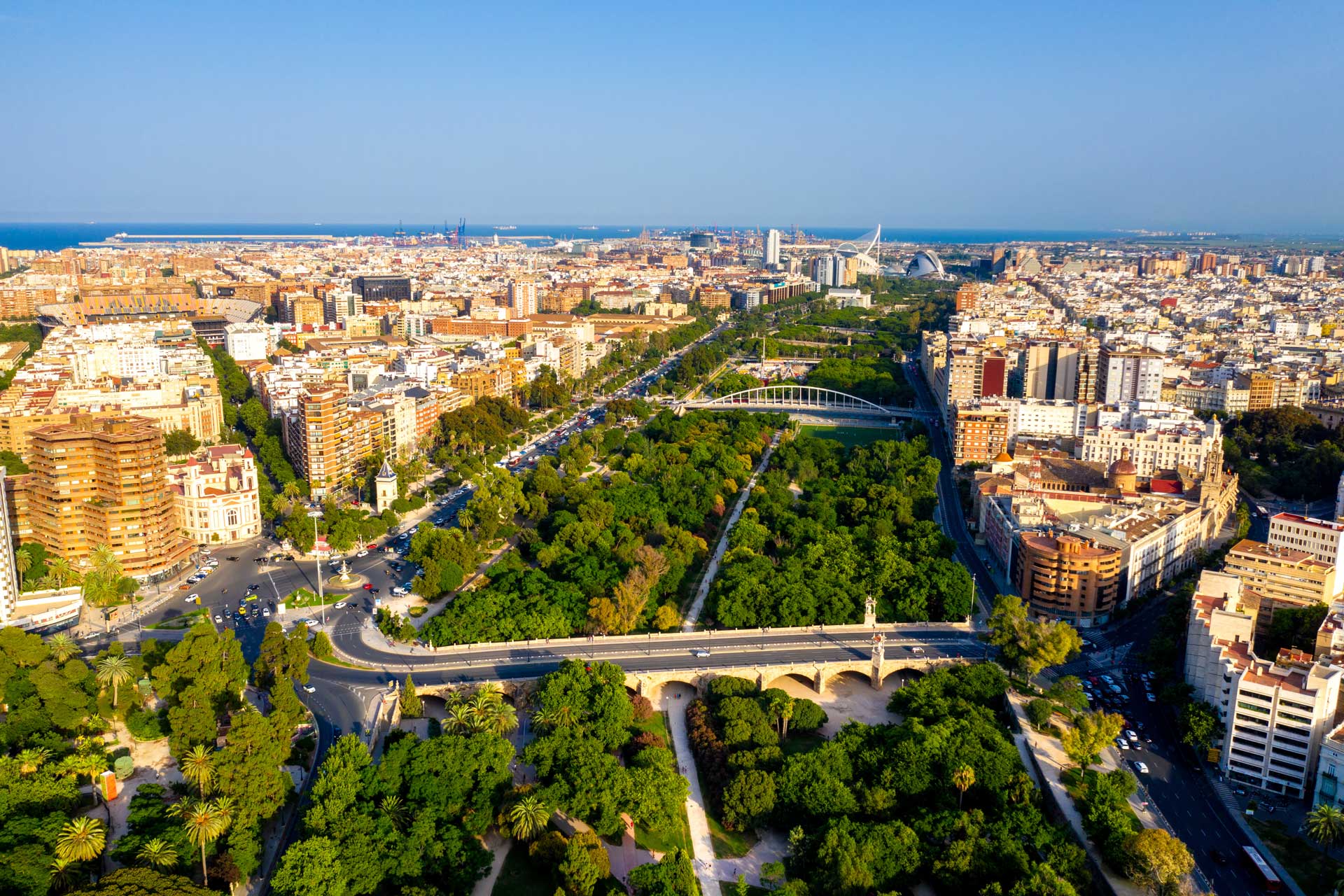
Just across from the Turia Gardens, Pla del Real feels different almost immediately.
There is less noise, fewer distractions, and more space between things.
It is still central — you are minutes from everything — but the atmosphere shifts. People stay longer here. Buildings are often more functional, sometimes less charming at first glance, but easier to live in day to day.
This is typically where buyers land when they start refining their criteria. When the initial idea of “being in the centre” becomes more specific:
close, but not inside the movement.
If you imagine a daily routine that includes walking or cycling through the Turia, quieter evenings, and a more residential rhythm, this neighbourhood tends to make sense.
It is not the most obvious choice at the beginning.
But often, it becomes the right one.
Ruzafa – Attractive, But Not for the Reasons You Think
Ruzafa is often presented as the place to be.
And in many ways, it is. There is energy, life, and a sense that things are happening. Restaurants, cafés, galleries — everything is close, and everything is active.
But this is where expectations need to be calibrated.
Ruzafa is not a uniform neighbourhood. Some streets are very appealing. Others are still in transition. Buildings can vary significantly, and what looks attractive at first glance does not always translate into long-term comfort.
If you are considering Ruzafa, it is usually because you are drawn to a certain lifestyle — not just a property.
That can make sense.
But it requires a more selective approach, and a clear understanding of what you are buying into.
El Carmen – Character Comes With Responsibility
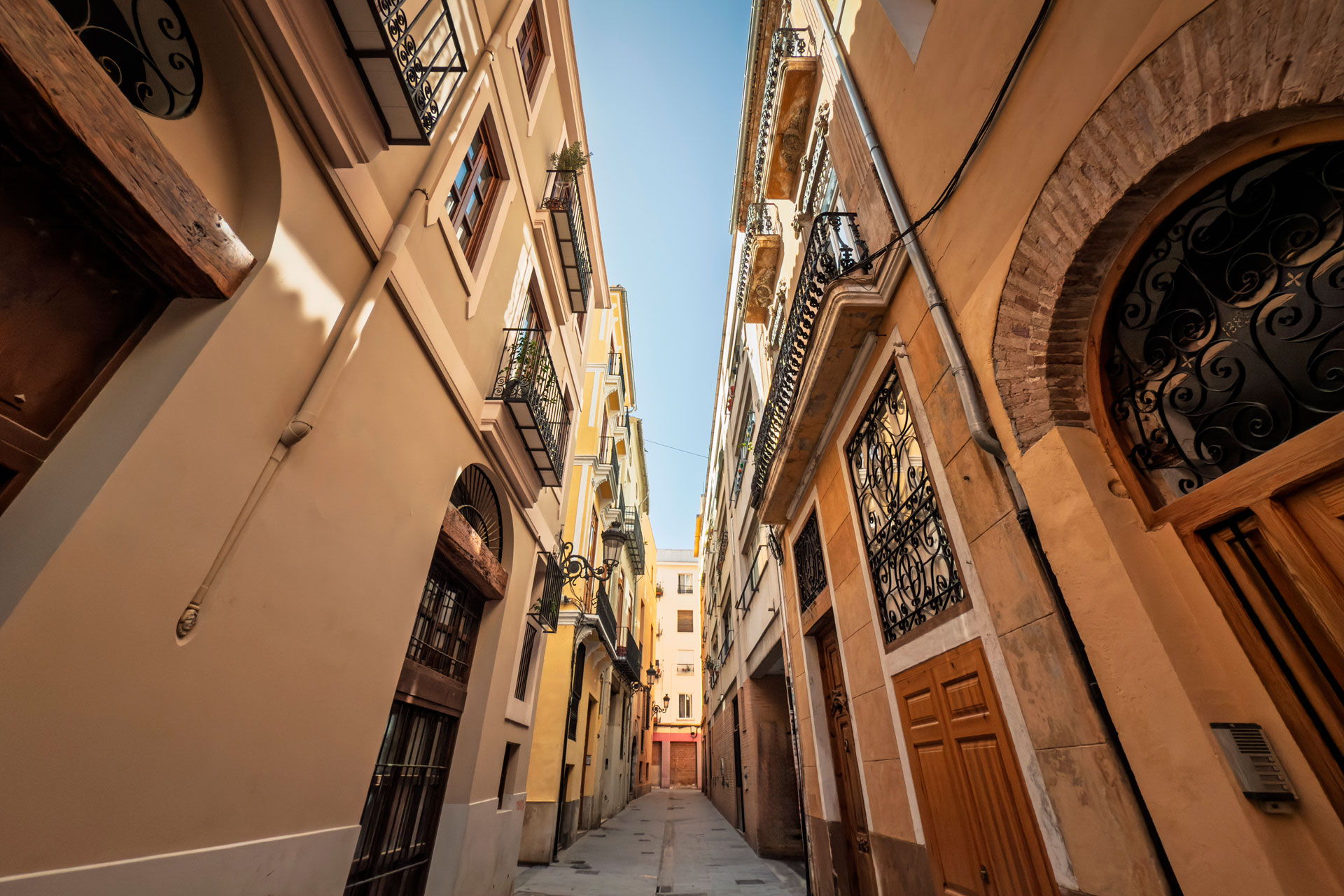
In Ciutat Vella, El Carmen offers something that is increasingly rare: authenticity.
Stone walls, wooden beams, irregular layouts — properties here have presence.
For some buyers, this is exactly what they are looking for. A place that feels different from anything they have owned before. Something with texture, history, and identity.
But this comes with complexity.
Buildings can have structural constraints. Renovations are often more involved than expected. Regulations can limit what is possible. And resale depends heavily on the exact location and execution of the project.
Buying here is not just a purchase.
It is a commitment to managing something more nuanced.
For the right profile, it can be very rewarding.
For others, it becomes heavier than expected.
City of Arts & Camins al Grau – The Comfortable Option
Around the City of Arts and Sciences, the experience is different again.
Buildings are newer. Layouts are more predictable. You will often find parking, pools, and features that are harder to secure elsewhere in the city.
For many international buyers, this feels familiar. Easier to project into. Easier to manage remotely.
But there is a trade-off.
These properties tend to be more standardised. The long-term value depends less on uniqueness and more on the specific development and its maintenance over time.
This is not necessarily a problem — it is simply a different type of purchase.
One that prioritises ease over character.
Beyond the City – Where Life Expands
At some point, many buyers step outside the city and start looking at places like Godella, Rocafort, La Eliana, or Los Monasterios.
The shift is immediate.
More space. More privacy. A different pace entirely.
These neighbourhoods are not just about property — they are about daily life. Schools, routines, outdoor space, and a level of comfort that is difficult to find in the centre.
But here too, expectations need to be aligned.
You will depend on a car.
You will be less connected to the city’s daily movement.
And not all urbanisations offer the same level of quality or long-term value.
For those planning to settle more permanently, this often becomes the logical direction.
But it is rarely the first step.
Choosing the Right Neighbourhood Is About Clarity, Not Preference
Most buyers arrive with a general idea:
central, nice, maybe with outdoor space.
Then reality introduces constraints. Availability, building quality, legal considerations, timelines.
And slowly, the decision becomes more structured.
What matters is not finding the “best neighbourhood” — it is understanding which one aligns with how you will actually live here.
A property that works for a few weeks a year is not the same as one you will use daily.
A good investment is not always a comfortable home.
And a beautiful apartment is not always in the right building.
A Final Word
Valencia is a city where it is still possible to buy well.
But it is also a city where it is easy to misread what you are seeing.
The differences are subtle, and they are rarely visible during a first visit.
This is why most buyers who approach the process methodically — taking the time to understand neighbourhoods, buildings, and market dynamics — tend to make better decisions.
Not because they know more at the start.
But because they are guided through it with clarity.
If you’re considering buying in Valencia, understanding the right neighbourhood is where everything starts. You can explore how we guide buyers here: Pre-Move Consultation