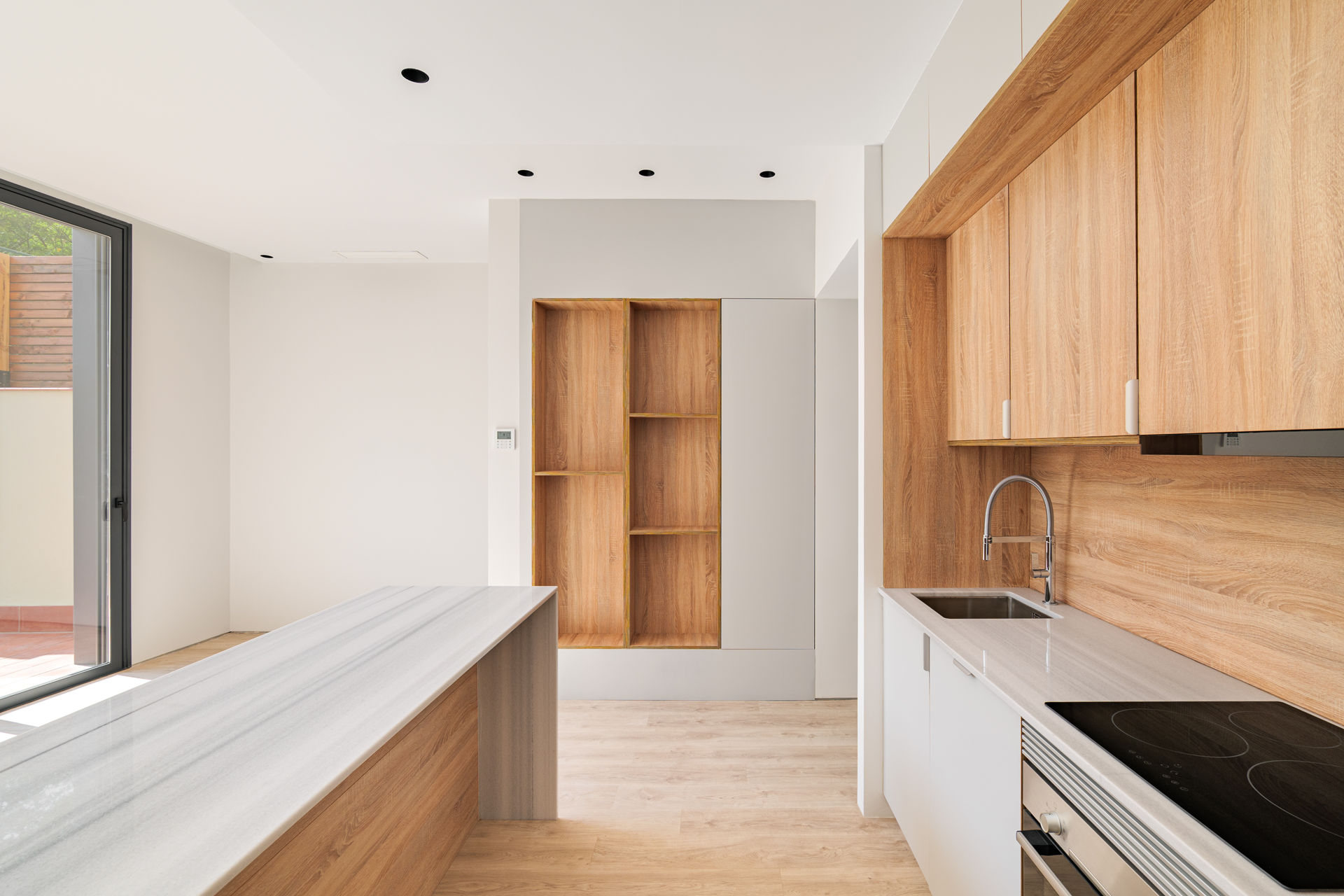

You have found an apartment in Valencia, or a house in one of the residential towns around the city, that you really like. The landlord, or the agency, sends over a contract and mentions, almost in passing, that it is an “11-month contract”, a seasonal rental contract, because “that is how it works here” and “it is more flexible for everyone”. You are moving with your family, you need to register at the town hall, enrol the children at school and perhaps file a visa application. And you are not sure whether this detail matters.
It does. In Spain, the type of rental contract decides how long you can stay, how much you pay upfront, who covers which fees, and whether the address will be accepted for your residency paperwork. The rules also changed in October 2026, which makes the difference even more important than it was a year ago.
Over the years, we have helped many families settle in Valencia, and the same confusion comes up again and again. So let’s go through it calmly: the two kinds of contract, what each one really gives you, why “11 months” keeps coming up, when a seasonal contract does make sense, and how to tell which one you are being offered.
Two contracts that look alike, but aren’t
Spain’s tenancy law, the Ley de Arrendamientos Urbanos (LAU), distinguishes two main kinds of residential rental:
- The long-term residential contract (contrato de vivienda habitual, article 2 of the LAU). It covers your permanent home: the place where you actually live, register, and send your children to school from.
- The seasonal contract (contrato de temporada, article 3 of the LAU). It covers a temporary need: studies, a work assignment with an end date, medical treatment, or a few months while your own home is being renovated.
The key point is this: what decides the type of contract is not the number of months written on the first page. It is the purpose of the rental. An 11-month contract can be a long-term residential contract, and a seasonal contract can, in some cases, last longer than a few months. If there is ever a dispute, a court looks at the reality of your situation, not only at the title of the document.
If Spanish terms such as empadronamiento or fianza are still new to you, our Spanish relocation glossary explains them in plain English.
What a long-term rental contract gives you
This is the contract designed for people who live in the home. It comes with real legal protections, even if, as you will see, everyday practice in Valencia does not always follow the law:
- The right to stay. Even if the contract says one year, you can stay up to five years (seven if the landlord is a company), renewed year by year. The landlord can only end it earlier for their own or a close relative’s need for the home, after the first year, and only if the contract provides for it.
- The freedom to leave. After six months, you can end the contract with 30 days’ notice. The contract may set a compensation, capped at one month’s rent for each year left to run, prorated.
- Upfront costs: what the law says, and what you will really pay. The legal deposit is one month’s rent, and extra guarantees are capped at two months. In practice, landlords in Valencia often ask for those extra months: rent default insurance (seguro de impago) is harder to obtain when the tenant is not yet tax resident in Spain, although some insurers do cover it, and pets often mean one more month. At signing, a realistic budget is the first month’s rent, the deposit, one to two months of additional guarantee, possibly another month if you have pets, plus the agency’s fee. Not all of this is always legal, but it is what you should be ready for.
- Agency fees: banned on paper, very common in practice. By law, management and contract fees are paid by the landlord, and in new contracts the property tax (IBI) cannot be passed on to the tenant. In Valencia, however, almost every agency still asks the tenant for one month’s rent or 10% of the annual rent, under another name: “service fee”, “management”, “relocation package”. A new name doesn’t change the rule, so ask exactly what the payment covers.
- Predictable rent. Until the end of 2027, annual rent updates are capped at 2% unless both sides agree otherwise.
- An address that works for your paperwork. It is the contract town halls, schools and consulates expect when you register, enrol your children or apply for residency.
Some landlords still try to charge fees or add clauses that are no longer allowed. Our article on renting mistakes to avoid in Valencia covers the most common ones.
What a seasonal rental contract is, especially since October 2026
For years, the seasonal contract was largely a free zone: few rules, freely agreed terms, and no right to stay beyond the end date. That changed with a decree that came into force on 8 October 2026 and was confirmed by Parliament on 12 November 2026. Today, a seasonal contract:
- Must state a real temporary reason, such as studies or a work assignment, and the tenant must be away from their usual home. If there is doubt, it is the landlord who has to prove the reason.
- Must last more than 31 days and, as a general rule, no more than 12 months.
- Becomes a long-term residential contract if the reason is missing, if it runs beyond 12 months without justification, or if more than two contracts are signed in a row between the same parties for the same home.
- Cannot, on paper, pass management fees or IBI on to the tenant, and extra guarantees are limited to one month on top of the deposit.
- Ends on the agreed date, with no right to extension.
Seasonal contracts signed before 8 October 2026 keep their original rules until they end. Housing law in Spain has changed several times this year and may change again, so it is always worth checking the current rules before you sign anything.
The padrón: where a seasonal contract often gets stuck
If you are moving from abroad, almost everything you need to settle depends on one document: your certificate of registration on the padrón, the municipal register of residents. It is usually requested for your residence card (TIE) or your EU registration certificate, to enrol your children at school, to access public healthcare and for many local procedures. This is where the type of contract matters most.
In Valencia city, to register as a tenant, the town hall asks for:
- A rental contract in force, signed by everyone named in it, with a duration of more than six months.
- The cadastral reference of the property, in the contract or in a supporting document.
- The latest rent receipt or bank transfer, paid within the last two months.
Contracts renewed month by month do not count towards the six months. For tourist contracts or contracts that are not for habitual residence, the town hall can ask for additional proof that you really live there. National guidelines for town halls go in the same direction: the reference document is a rental contract for habitual residence, precisely to keep out tourist lets and short contracts.
On paper, a seasonal contract of more than six months is not automatically refused. In practice, it creates a contradiction. Since October 2026, a seasonal contract must state that you are temporarily away from your usual home, while the padrón is the register of where you usually live. That is exactly the kind of file that gets questioned, delayed or refused, and every week lost at the town hall pushes back your residence card, your school enrolment and your health card. Requirements can also differ from one town to another, so if you are settling outside Valencia city, check with that town hall.
If you are coming from outside the EU
For our clients from outside the European Union, this is the point to remember. If you arrive with a long-stay Spanish visa, such as a non-lucrative visa, a digital nomad visa or a family visa, you have one month from your entry into Spain to apply for your residence card, the TIE. In Valencia, the padrón certificate is part of the file our clients are asked for at that appointment.
In other words: no long-term contract, no padrón; no padrón, no TIE within the deadline. A contract that gets questioned at the town hall puts your whole residency timeline under pressure, at the very moment you have the least room for delays. This is why we always plan the rental and the TIE appointment together.
This is why our advice is simple: if you are coming to live here, sign a long-term residential contract of 11 months or more from the start, ideally for one year, renewable up to five years.
Why “11 months” keeps coming up
You will hear about 11-month contracts for two very different reasons, and it helps to separate them.
The first is a habit of the market. For a long time, some landlords offered “11-month seasonal” contracts to people who were clearly moving to Valencia to live, because a seasonal contract avoided the five-year right to stay, the deposit cap and the ban on agency fees. Families signed them in good faith and discovered later that they had far fewer rights than they thought. The new rules make this much harder to justify, but if it ever came to a dispute, you would have to argue your case. That is not how anyone wants to spend their first year in a new country.
The second is the threshold we use ourselves. At Livin’Valencia, we only help with long-term homes, meaning residential contracts of 11 months or more. The reason is simple: our clients are settling, and as we have just seen, everything starts with the padrón. Most Spanish consulates also do not accept short or seasonal rentals as proof of accommodation, as we explain in our guide to proof of accommodation for a Spanish visa.
So when we say 11+ months, we are really saying: a home you intend to live in, under a contract that protects you as a resident.
When a seasonal rental contract does make sense
A seasonal contract is not a bad thing in itself. It exists for real situations, and in those situations it is the right tool:
- A landing period. Some families prefer a furnished apartment for the first one to three months, to discover neighbourhoods before choosing where to settle. Keep in mind that a contract of six months or less will not let you register on the padrón, and if you need a visa, the consulate will usually want the long-term address before you apply.
- A defined assignment. A secondment, a research project, a sabbatical or a school year abroad with a clear end date.
- Between two homes. For example, while the property you have bought is being renovated. If that is your situation, our renovation service can help you plan the works and their timing.
In each case, make sure the real reason is written into the contract. Keep in mind, too, that it is rarely the cheaper option: the monthly rent on a seasonal contract is often noticeably higher than for a comparable home on a contract of 11 months or more. And if you already know you are staying, don’t sign a seasonal contract because it is “simpler”. Ask for a long-term residential contract from the start.
How to tell which contract you are being offered
Contracts in Spain are not always clearly labelled, and a translation can blur the difference. Before you sign, look for these points:
- The legal basis. A long-term contract refers to article 2 of the LAU or to vivienda habitual. A seasonal contract refers to article 3, uso distinto de vivienda or temporada.
- The stated reason. A seasonal contract must explain why the stay is temporary. If it gives no reason, or a vague one, ask questions.
- Duration and renewal. Look at the end date, the renewal clauses and the notice periods on both sides.
- The deposit and guarantees. One month’s deposit plus capped guarantees is typical of a long-term contract. Ask what any additional amount is for, and get it in writing.
- Fees and taxes. Check who pays the agency, the contract drafting and the IBI, and what any “service” fee actually covers. These fees are asked for even more often on seasonal contracts.
- Registration. Make sure nothing in the contract prevents you from registering at the address.
- The inventory. If the home is furnished, an inventory with photos, signed by both sides, avoids discussions when you leave.
Landlords in Valencia often ask foreign tenants for a complete financial file, which can feel intrusive the first time. Our FAQ on the solvency dossier explains what is usually requested and why.
Going it alone, or with someone on your side
You can absolutely rent a home in Valencia on your own, and many people do. But it helps to know who is who. In most rentals, the agency is mandated by the landlord. Its job is to let the property on the landlord’s terms, and when interests diverge, on the type of contract, the guarantees, the clauses or the rent, it will naturally take the landlord’s side. That isn’t a criticism, it’s their role.
The other option is to have someone who works only for you. We never represent landlords, and the contract is only one part of what we look at. Before you commit, we look at everything the contract won’t tell you:
- The home itself. Its real condition, how it will feel in August and in January, the noise, the light, and what the photos didn’t show.
- The building. How the community is run, the state of the common areas, and the neighbours you will share it with.
- The neighbourhood. Daily life, schools, transport, and what the street is like at different times of day.
- The landlord and the contract. Checking that the person signing actually owns the property, reviewing every clause with our partner lawyer when needed, and making sure the contract matches your real situation.
- The practical side. Your solvency file, the negotiation of terms, and the transfer of utilities into your name.
A home is not just a lease. It is where your family will wake up every morning, where your children will make their first friends, and where you will start feeling at home in a new country. A rental should be safe on paper and right in everyday life. That is what our home rental support is designed for. And if you are still working out your budget, our article on renting in Valencia for less than €1,200 a month gives a realistic picture.
Questions tenants also ask us
Can I rent a home in Valencia before arriving in Spain?
Yes. Viewings can be done by video or by someone you trust, and the contract can be signed remotely. Be very careful with deposits requested by people you have never met: only pay once you know who owns the property and the contract has been reviewed. Rental scams targeting people searching from abroad are common.
Can my landlord sell the home while I live there?
Yes, but under a long-term residential contract, the new owner must respect your lease for the protected period of five years (seven with a company landlord). In many cases you also have a right of first refusal if the home is sold, unless you waived it in the contract.
When should I get my deposit back?
The landlord has one month from the day you return the keys to give the deposit back. After that, the amount owed starts to earn legal interest. The landlord can deduct unpaid rent, bills or damage beyond normal wear and tear, which is why a signed inventory at the start matters.
Do I need an NIE to rent?
It is not always required by law to sign a lease, but in practice most landlords, banks and utility companies will ask for it. If you are moving for the long term, apply for it early: it will make the rental, the utilities and almost every other step much simpler.
Settling in Valencia for the long term?
If you are planning to make Valencia your home, book a free 15-minute courtesy call. Tell us about your family, your dates and your budget, and we will give you an honest view of what is realistic and whether our help makes sense for you. And if you only need a few months, we will tell you that too, and point you in the right direction.