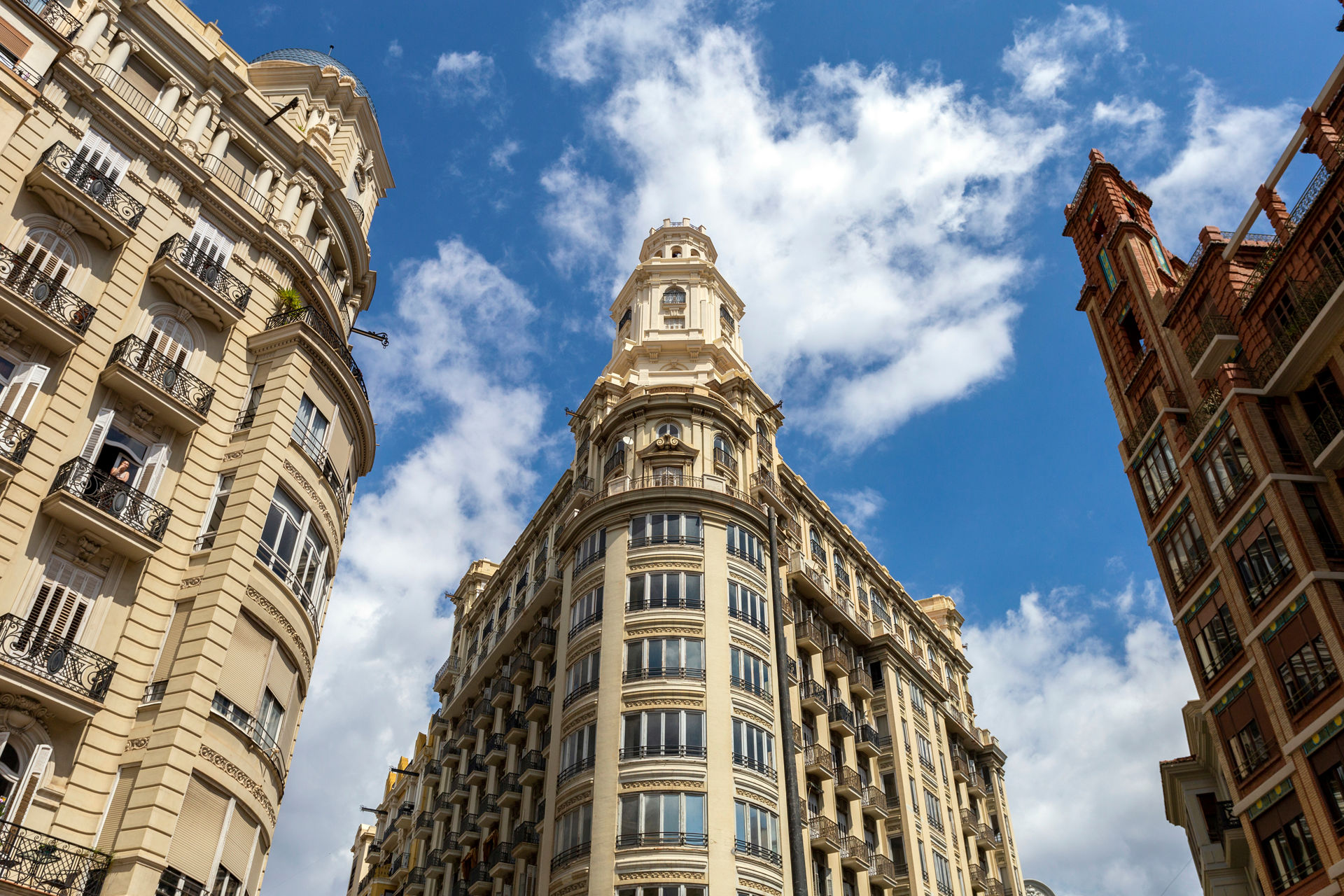
Ruzafa is on every list of places to see in Valencia. The market, the cafés spilling onto the pavements, the galleries, the light displays at Fallas: it is the Valencia of postcards and Instagram, and many people who visit for a weekend fall in love with it.
Living in Ruzafa is a different experience from visiting it. We have helped families settle in Valencia for more than a decade, and we know the neighbourhood well. We like it a lot. But when clients ask us where to look for a home, Ruzafa is rarely the first area we suggest, with one notable exception that we explain below.
This guide shares what we tell our clients: where Ruzafa comes from, what the flats are really like inside, how noise and Fallas affect daily life, who tends to be happy here, and what to check before you rent or buy.
Where Ruzafa is, and how it came to be
Ruzafa, or Russafa in Valencian, sits just south of the old town and belongs to the Eixample district, alongside Pla del Remei and Gran Vía. If you want to compare the three, our local guide to Eixample walks through each of them.
The name comes from the Arabic ruṣāfa, a garden, and Ruzafa was an independent town until 1877, when it was annexed by Valencia. For most of the twentieth century it was a working-class neighbourhood, and until around ten years ago parts of it had a rather rough reputation. Rehabilitation plans, low rents and the arrival of artists, chefs and young professionals then changed it quickly. Today it is one of the most sought-after addresses in the city.
That history matters, because it explains the homes you will find there today.
What Ruzafa is like today
Ruzafa has a lot going for it, and its fans are right about most of it:
- The market. The Mercado de Ruzafa, a 1950s building, is one of the largest in the city and the real heart of the neighbourhood.
- Parque Central next door. The new central park, built over former railway land, gives Ruzafa the green space it long lacked.
- Excellent connections. The Estació del Nord and the Joaquín Sorolla high-speed station are within walking distance, and the Russafa stop on metro line 10 links the area to the City of Arts and Sciences. Getting in and out of Valencia is easy.
- Everything on foot. Bakeries, restaurants, independent shops, coworking spaces and some of the city’s best coffee are a few minutes away.
If that list were the whole story, Ruzafa would suit almost everyone. The rest of the story lies inside the buildings and in the streets at night.
Inside a typical Ruzafa flat
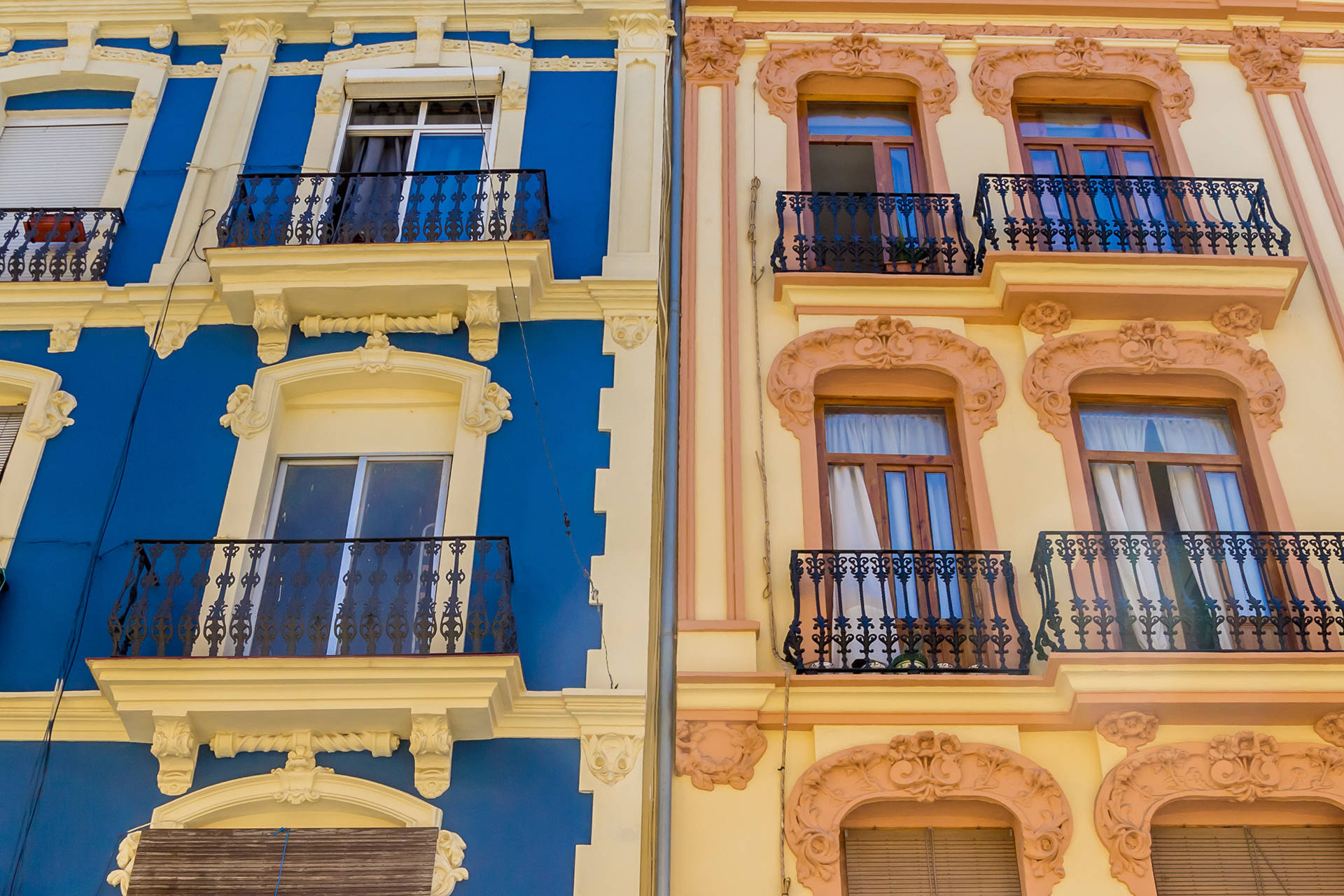
Most of Ruzafa was built as working-class housing, and the layout of the flats still reflects it. Before you fall for a façade with pretty balconies, it helps to know what usually lies behind it:
- Small and deep. Flats tend to be modest in size, laid out along a long corridor that runs from the street to the back of the building.
- Few outside windows. Often only two or three rooms face the street: typically the living room, sometimes with an open kitchen, and one bedroom.
- Rooms facing inward. The kitchen and bathroom usually open onto narrow internal light wells, and the remaining bedrooms look onto the courtyard at the back of the block, the patio de manzana, when there is one and when there is enough space.
- Thin walls. Sound insulation between flats is generally poor, so you will hear your neighbours, and they will hear you.
- Older building standards. Thermal insulation, windows and installations are often far from current standards, and some buildings still have no lift.
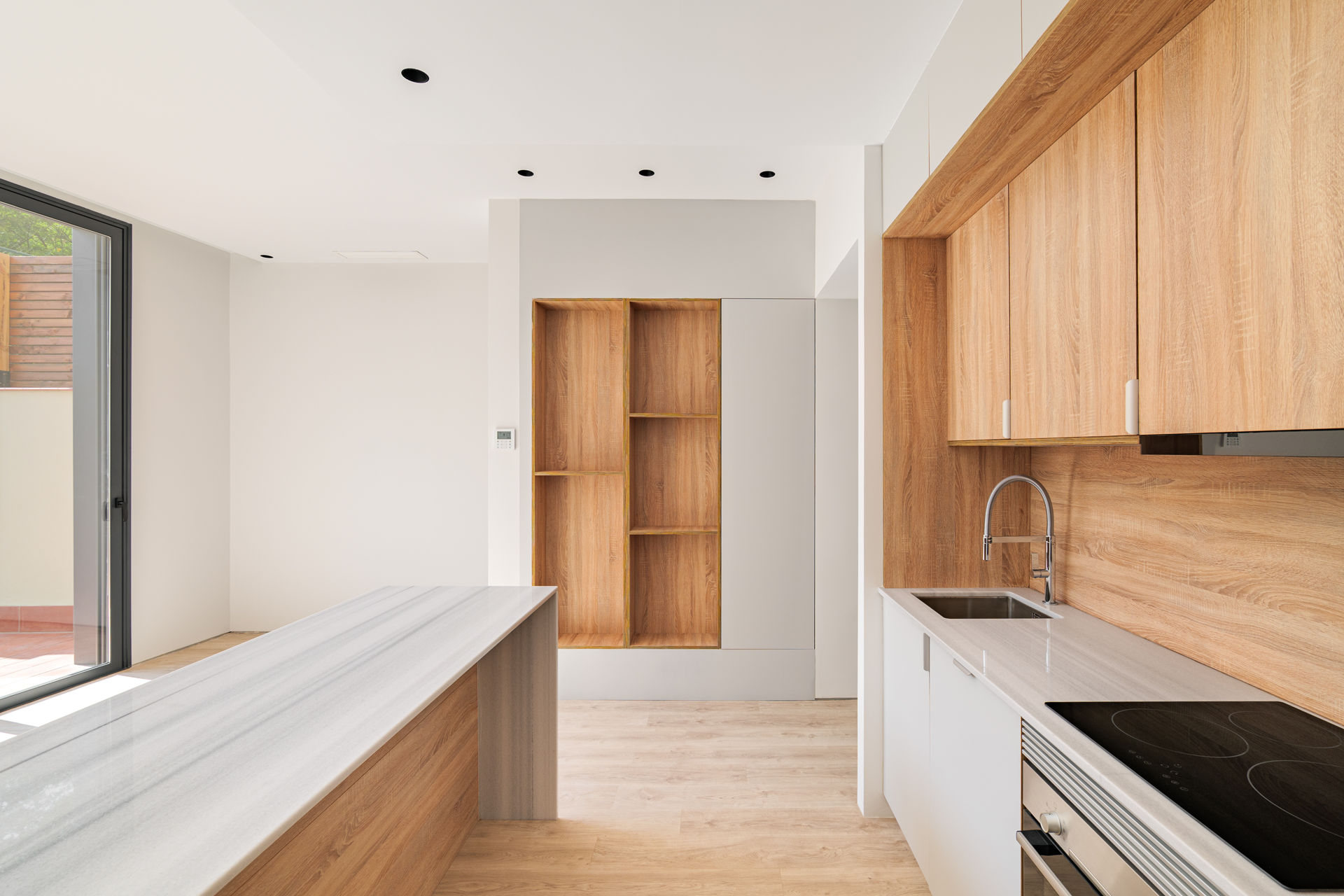
Some flats have been beautifully renovated, with high ceilings and original tiled floors brought back to life. Others need serious work, and even a good renovation cannot change the orientation of a flat or the thickness of its party walls. Our guide to Valencia homes in the summer heat explains why orientation and insulation matter so much here. And before buying in an older building, the community’s finances and planned works deserve as much attention as the flat itself, as we explain in our due diligence FAQ.
Noise: the part the postcards leave out
Ruzafa’s success has a price, and residents pay it in decibels. The neighbourhood has a very high concentration of bars, restaurants and terraces, and the streets are lively every evening, not only at weekends. Because every street is animated, choosing the “quiet street” is harder than it sounds.
The noise does not stop at the façade either. For years, many restaurants used the courtyards at the back of the blocks for extra tables, so even rooms facing the patio de manzana are not always the calm refuge you might expect.
The city has acknowledged the problem. In April 2026, Valencia City Council definitively declared Ruzafa an acoustically saturated zone (ZAS), covering 18 streets and a surrounding buffer area. In practice, it suspends licences for opening or enlarging venues and shortens the hours of terraces and nightclubs. It should help over time, but it does not turn Ruzafa into a quiet neighbourhood.
Fallas in Ruzafa
Then there is March. Ruzafa is one of the most intense Fallas neighbourhoods in Valencia. Its special-category fallas, such as Cuba–Literato Azorín and Sueca–Literato Azorín, and its famous illuminated streets attract thousands of visitors every night. The light displays are switched on in early March and the festivities run until 19 March, with streets closed, music late into the night, firecrackers at all hours and public lighting installed along entire streets.
Many people who live in Ruzafa simply leave town for Fallas. If you are thinking of living here, it is worth asking yourself honestly whether you would want to, or could, do the same every year.
Living in Ruzafa: who it suits, and who it doesn’t
Over the years, a pattern has become clear. Ruzafa tends to suit:
- Young professionals and couples without children who want to walk everywhere.
- People who love restaurants, culture and street life, and are happy to be part of it.
- Those who spend a lot of time out of the flat and value location over space.
It is usually harder for:
- Families with young children, who need sleep, space and a calm routine.
- Light sleepers, and people working from home in a street-facing room.
- Anyone who needs parking, a garden or a large living area.
None of this is a rule. Some families are very happy in Ruzafa, usually because they found the right building, on the right floor, facing the right way.
Buying in Ruzafa: why a penthouse changes everything
There is one situation where we do recommend Ruzafa without hesitation: buying a penthouse, if the budget allows. On the top floor, you are above the street noise, you share fewer walls with neighbours, and a good terrace gives you views over the rooftops and outdoor space that are rare in central Valencia. It offers a way of living in the city that is genuinely special. Our page on buying a penthouse in Valencia explains how we search for them.
A first- or second-floor flat on a lively street is a very different proposition. Before committing, visit it on a Friday night, check what the back rooms look onto, and ask yourself how you would feel there during Fallas.
As a rough guide, asking prices on idealista in November 2026 mostly sit between about €4,000 and €7,000 per m². These are indicative figures that vary a great deal from street to street, and with the floor, the condition of the building and the quality of the renovation. Renovated penthouses and the best buildings sit at the top of that range, and sometimes above it. Whatever you buy, make sure the terrace is legally registered and properly waterproofed, and read our guide to the arras contract in Valencia before you pay a deposit.
Renting in Ruzafa
Renting is often the wiser way to try Ruzafa before committing to it. Many flats on the market are furnished and aimed at short stays, so look carefully at the type of contract you are offered: if you are moving to Valencia to live, you need a long-term residential contract.
As a guide, two-bedroom flats on idealista in November 2026 are mostly listed between about €1,500 and €2,400 a month, with a few smaller or simpler ones from around €1,200. Again, these are averages that vary with the street, the floor, the condition and the furnishing. Visit at different times of day, ask the agency directly about noise and Fallas, and check whether the bedrooms face the street, a light well or the courtyard. Our home rental support does exactly this for our clients before they sign.
If you like Ruzafa but want more calm
If what attracts you is central living, character and walkability, a few areas offer much of it with fewer late nights:
- El Pla del Real, an elegant district close to the Turia gardens and the universities. See our guide to living in El Pla del Real.
- Camins al Grau, a modern district with more space and newer buildings. See our guide to living in Camins al Grau.
- The towns around Valencia, if you have children and want a garden, good schools and quieter evenings. Our guide to the best suburbs near Valencia is a good starting point.
Going it alone, or with someone on your side
You can absolutely explore Ruzafa on your own, and you should spend time there before deciding. But it helps to know who is who. In most sales and rentals, the agency is mandated and paid by the owner. Its job is to get the property sold or let, and it will naturally show it at its best: in daylight, on a weekday, with the windows closed. There is nothing wrong with that; it is their job.
The other option is to have someone who works only for you. We never represent sellers or landlords, and in a neighbourhood like Ruzafa, the questions that matter most are the ones a listing never answers:
- The home itself. Its real condition, its orientation, what each room faces, and the work it will need.
- The building. Its state, the lift, the community’s finances, the works already voted and the neighbours you will share it with.
- The street. What it is like at 11 p.m. on a Friday, on a Sunday morning, and in the middle of March.
- The legal side. A complete due diligence with our partner lawyer, including the terrace, the registry and the community.
- The fit with your life. Whether Ruzafa really suits your family, your work and your rhythm, or whether another neighbourhood would make you happier.
In the end, you are not choosing a postcard. You are choosing the place where you will sleep, work, raise your children or invest your savings for years. A home should be right on paper and right in everyday life. That is what our home buying service is designed for.
Questions people ask us about Ruzafa
Is it Ruzafa or Russafa?
Both. Russafa is the official Valencian name, used on street signs and by the city council, and Ruzafa is the Spanish version. You will see both on listings, and they refer to exactly the same neighbourhood.
Is Ruzafa safe today?
Yes, in the same way as other central neighbourhoods of Valencia. Its rough reputation belongs to the past. As in any busy nightlife area, keep an eye on your phone and bag on crowded evenings, and choose a building with a secure entrance.
Is it easy to park in Ruzafa?
Not really. Street parking is scarce and many buildings have no garage. Spaces are often sold or rented separately: on current listings, a garage space can add around €150 a month to a rental, or tens of thousands of euros to a purchase.
Are there schools nearby?
Yes, there are public and semi-private schools in and around the neighbourhood. Most international schools, however, are in the towns around Valencia, which is one reason many international families choose to live there instead. Our guide to where to live near the best international schools maps the main options.
Thinking about Ruzafa?
If Ruzafa is on your list, book a free 15-minute courtesy call. Tell us how you live, who is moving with you and what you hope to find, and we will tell you honestly whether Ruzafa is the right fit, and if it isn’t, which neighbourhood might be.