Last updated: November 2026
When families tell us they want “a house with a garden, good international schools and the sea not too far away”, the conversation often turns to Los Monasterios and Alfinach. These two residential communities sit side by side on the hills above Puçol, about twenty minutes north of Valencia, where the last slopes of the Sierra Calderona look out over the Mediterranean.
We have been helping international families settle around Valencia since 2015, and we have walked these streets with many of them. Some fall in love on the first visit. Others realise, after a week of school runs and supermarket trips, that they would be happier somewhere more walkable. Both outcomes are fine. What matters is knowing what daily life in Los Monasterios and Alfinach actually looks like before you sign anything.
This guide is our honest view: who these communities suit, what the homes are like, how the schools and commutes work, and the questions we ask every family before they commit.
Los Monasterios and Alfinach: two neighbours, two characters
From the motorway the two names often appear together, and property portals frequently group them as a single area. On the ground they feel a little different.
Los Monasterios is the larger and more established of the two. It climbs the hillside in several phases, with detached villas on generous plots, some newer apartment developments and, at its heart, the Club de Campo. The club is the social centre of the community: several swimming pools, tennis and padel courts, football and basketball pitches, a gym and a restaurant. Homeowners generally hold membership, and for many families it becomes the place where children make friends and parents meet neighbours. The American School of Valencia is also located inside Los Monasterios, which shapes the rhythm of the area on school mornings.
Alfinach sits just beside it and covers roughly 800,000 m². It is a gated community with 24-hour security, landscaped common areas and its own social club with padel, tennis, basketball and football, a children’s pool and a restaurant. Homes here are mostly detached and semi-detached houses, and the atmosphere tends to feel slightly more compact and residential. A local bus links Alfinach with the town of Puçol, the beach and the train and metro connections, which is helpful for teenagers who want a bit of independence.
Both communities offer the same core promise: space, greenery, security and a strong sense of community. The differences are in the details, such as plot sizes, slopes, views, the walk to the club and the age of the homes. Those details matter more than the name on the listing.
Who tends to be happy living here
Over the years we have noticed a few profiles that settle well in Los Monasterios and Alfinach.
- Families with school-age children who have chosen, or are considering, the American School of Valencia or Caxton College. Living close to school can transform the daily routine.
- Parents who work remotely or travel often and want a calm base with good airport access, rather than a daily commute into the city centre.
- Families moving from the United States, the UK or Northern Europe who are used to a house with a garden and would struggle with a city apartment.
- People who value sport and outdoor life: the clubs, the Sierra Calderona trails and the beach are all close by.
It may be less suitable if you want to walk to cafés, bakeries and restaurants every day, if you do not want to drive, or if you are looking for an urban social life on your doorstep. Puçol town has shops and services, but from most streets in these communities you will be getting in the car. We prefer to say that clearly at the start rather than discover it after the move.
The homes: what to expect and what to check
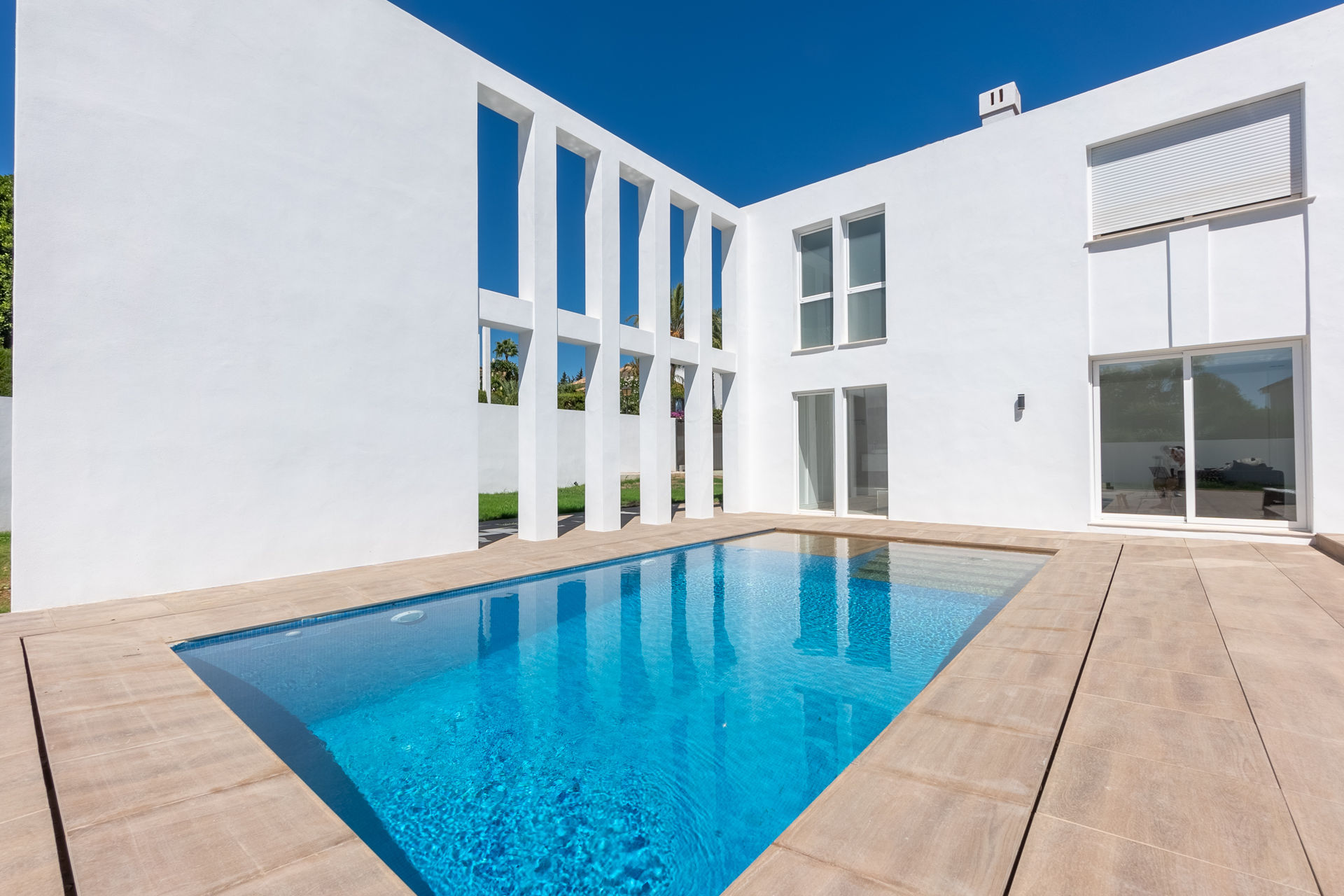
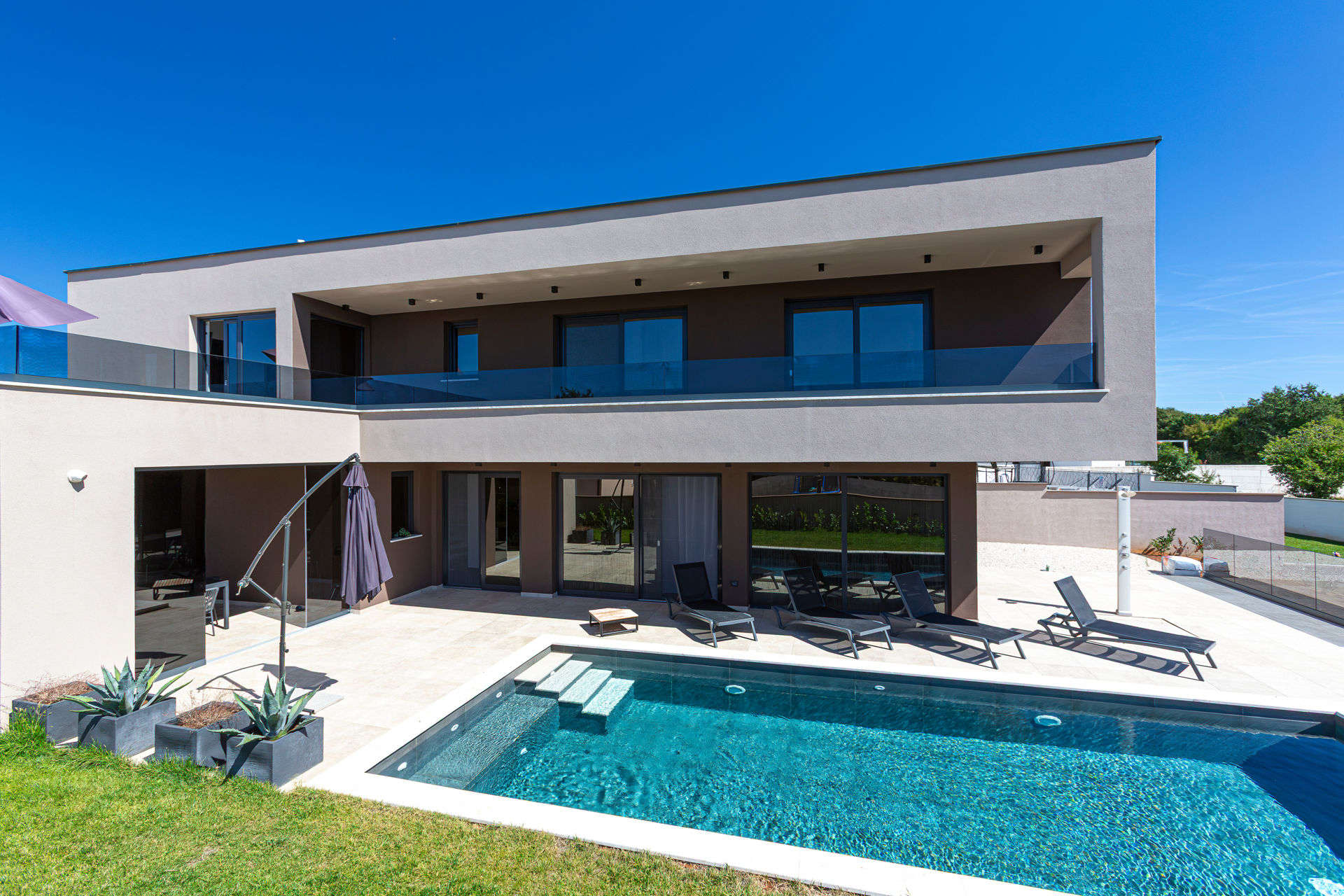
Most homes in Los Monasterios and Alfinach are detached or semi-detached houses, many built from the 1990s onwards, with private gardens and often a pool. You will also find more recent apartment developments with shared gardens, pools and gyms, which can be a good option for families who want the community without the maintenance of a large plot. If a villa is what you have in mind, our guide to buying a villa in Valencia covers the wider picture.
Asking prices for family villas in these communities typically start somewhere around €650,000 and go well beyond €1.6 million for larger homes with views or recent construction. Prices move with the market and vary enormously from one street to the next, so treat these figures as a rough orientation rather than a valuation.
When we visit homes with families here, we look closely at a few things that brochures rarely mention:
- The slope and layout. Hillside plots can mean beautiful views, but also many steps, terraces on several levels and a garage below the house. Think about young children, elderly parents and grocery bags.
- Orientation and shade. A south-facing terrace is lovely in February and very hot in August. Check where the sun falls at different times of day.
- Pool, garden and running costs. A large garden and pool need regular care. Ask about community fees, club membership, irrigation, gardening, pool maintenance and insurance, and add them to your monthly budget.
- Age of installations. Heating, air conditioning, insulation, windows and electrical systems can vary a lot in older villas.
- Legal situation. Extensions, pool houses and enclosed porches are not always registered. Before any purchase, the property’s legal and urban planning situation needs to be checked properly. Our legal checklist for buying property in Valencia explains what should be verified and when.
Renting is a sensible first step for many families. Long-term rentals in these communities exist, but supply is limited and good family homes near the schools tend to go quickly, especially in late spring and summer ahead of the school year. Landlords usually expect a solid file with proof of income and solvency. Our guide to renting in Valencia as a foreigner explains what landlords typically ask for and how to prepare.
Schools: often the main reason families choose this area
For many of the families we accompany, the school decision comes first and the house second. That is particularly true here.
The American School of Valencia is located inside Los Monasterios. Founded in 1980, it welcomes students from around age 2 to 18 and offers an American high school diploma alongside the International Baccalaureate Diploma Programme, which it has offered since 2004. For families arriving from the United States, the continuity of curriculum and calendar can make the transition much easier for children.
Caxton College is a short drive away on the outskirts of Puçol. Founded in 1987, it follows the British curriculum from age 1 to 18, with IGCSE and A-levels, and is known for its large campus and sports facilities.
Having two well-established international schools so close is a real advantage, but it does not mean places are guaranteed. Some year groups fill early, admission timelines vary, and each school has its own assessments and requirements. We always encourage families to visit, ask about waiting lists and understand the full cost, including registration, transport, uniforms and activities. Our article on school admissions in Valencia for 2027–2028 gives the current calendar, and our overview of where to live near the best international schools compares this area with others around the city.
A practical point: if your children will attend different schools, or if one parent commutes in a different direction, map the routes carefully. A home that is ideal for one school can mean long drives for another.
Getting around: car first, but not only
Los Monasterios and Alfinach are well connected by road. The A-7, the V-21 and the A-23 are all close, which means Valencia city centre is usually around twenty minutes away outside rush hour, and Valencia airport roughly fifteen to twenty-five minutes depending on traffic. The V-21 can be slow at peak times, so test your commute at the hour you will actually make it.
For public transport, the main options are in the surrounding towns rather than inside the communities:
- Cercanías train from Puçol, on the line between Valencia and Castellón, useful for reaching the city or travelling north along the coast.
- Metro Line 3 from Rafelbunyol, a short drive away, which runs into Valencia and continues to the airport.
- The local bus connecting Alfinach with Puçol town, the beach and the transport stops.
In practice, most families here have at least one car, and many have two. Teenagers often rely on parents, the bus or friends for evening plans. It is worth thinking about this honestly, especially if you are coming from a city where children travel alone on public transport.
Daily life: the beach, the mountains and Puçol town
One of the pleasures of this part of the Valencia region is how close everything feels. In a few minutes you can be walking a trail in the Sierra Calderona Natural Park, and in a few more you are on the beach at Puçol, which stretches for several kilometres and has held Blue Flag status. It is quieter and less built-up than the city beaches, which many families appreciate.
Puçol itself is a real Valencian town, not a resort. You will find supermarkets, a weekly market, pharmacies, banks, restaurants, sports facilities and local festivities that bring the streets to life. Some international families enjoy getting involved in town life; others stay closer to the club and school community. Both are possible.
For healthcare, the area falls under the Sagunto health department, with its public hospital in Sagunto, and there are private clinics and hospitals within reach in Valencia. If you have specific medical needs, it is worth checking which centres and specialists you will use before choosing a home.
For bigger shopping trips, cultural outings and restaurants, most residents head into Valencia or to the large shopping centres along the northern access routes.
Security, community and the social side
The gated character of these communities is part of their appeal, particularly for families who travel or who are new to Spain. Controlled access and security patrols give peace of mind, and the club environment means children can move around with a degree of freedom.
Community life varies from one phase to another. Some streets are very international, with families from across Europe and the Americas; others are mostly Spanish. Both can be welcoming. We suggest spending time at the club, the school gates or a local event before deciding. You will learn more about the atmosphere in an afternoon there than from any listing. If you are comparing gated communities, our guide to Santa Bárbara in Rocafort describes a different style of residential life closer to the city.
How Los Monasterios and Alfinach compare with other suburbs
Families often shortlist Los Monasterios and Alfinach alongside areas to the north-west of Valencia, such as La Cañada, L’Eliana, Godella or Rocafort. The main differences are geography and lifestyle. The north-west suburbs tend to have closer metro connections and more of a town feel, while Los Monasterios and Alfinach offer more space, the sea on one side and the mountains on the other, and immediate access to the American School and Caxton College.
For buyers comparing areas, our property pages on Godella, Rocafort, La Cañada and L’Eliana explain what each market offers.
There is no universal “best” area. The right choice depends on your schools, work, budget and the life you want on an ordinary Tuesday. Our guide to the best suburbs to live near Valencia can help you compare.
Questions we ask every family before they choose
Before recommending a home here, we usually work through a few simple questions together:
- Which school will each child attend, and how long will each journey take at 8 am?
- Where will each adult work, and how often will they need to be in the city?
- How many cars will you need, and who will drive the children to activities?
- How much time and budget do you want to spend on garden and pool maintenance?
- Do you want an international community, a Spanish environment, or a mix?
- What will you do on a rainy Sunday or a summer evening when everyone wants to go out?
If you will be travelling often, or splitting your time between Spain and another country, it is also worth thinking about who will look after the house while you are away. Our home assistance and property care services are designed for exactly that.
Is Los Monasterios or Alfinach right for your family?
Los Monasterios and Alfinach can offer a wonderful family life: space, sport, security, good schools nearby, the Sierra Calderona behind you and the Mediterranean in front. They also require a car-based routine and a realistic budget for running a house. The families who are happiest here are usually those who chose with both sides in mind.
As an independent, family-run firm, we work only for our clients, never for sellers or landlords. That allows us to give you an honest opinion about a street, a home or a school route, even when it is not what you hoped to hear. Through our relocation services for families, we can help you compare areas, organise visits, find a rental or buy the right home, and settle in with less stress.
If Los Monasterios or Alfinach is on your shortlist, book a free 15-minute courtesy call. Tell us about your family, your timing and your priorities, and we will give you an honest view of whether this area fits, and how we can help.