
Moving to Valencia, the parts you may love, and the parts to think through
People often ask us whether Valencia is a good place to move to. If you are weighing the pros and cons of moving to Valencia as an expat or family, a simple yes or no rarely helps. The better question is usually: Would I enjoy the way life works here?
Valencia can be a very good place to live. It can also feel quite different from the life you know, especially if you are coming from a larger North American home, relying on a car, or expecting the city to work like a warmer version of where you already live.
Those differences are not necessarily problems. They become problems when they arrive as surprises.
We have helped many international families and individuals make the move. Most choose to stay. The ones who decide to leave have their own reasons, often connected to work, family or a change in plans. We cannot promise that Valencia will be right for everyone. What we can do is help people look beyond the sunny holiday impression and consider how they will feel here on an ordinary Tuesday.
What can make daily life feel easier
Valencia is a city where many people can do more of their everyday life on foot. Depending on where you live and work, you may walk to the bakery, take a bike to the park, use public transport for a longer journey and leave the car at home. For people used to driving to most places, this can take adjustment. Then, for many, it becomes one of the things they value most.
The city also makes it easy to spend time outside. You can walk or cycle through the Turia Gardens, meet friends in a plaza, or sit at a café without planning a special outing. The beach is part of life here, though it is not the same as living beside untouched coastline. And if you are hoping for forests or mountain scenery, you will need to travel beyond the city. Valencia is flat, urban and Mediterranean. Its green spaces are valuable, but they are city parks, not wilderness.
Families often appreciate how naturally children fit into daily life. Children are part of meals out, neighbourhood routines and public spaces. The school run, the local park and the café can become familiar places where you start to recognise faces. For children attending a local school, Spanish and Valencian become part of their world too. How quickly they adapt depends on their age, personality and school, but the opportunity to grow up across languages and cultures is real.
Food can be another pleasure, particularly if you enjoy shopping for fresh produce and cooking at home. Valencia has local markets, greengrocers, bakeries and plenty of everyday ingredients. The region’s rice dishes, citrus, vegetables and seafood are part of its food culture.
The restaurant scene may feel different if you come from a city with an especially broad range of international cuisines. Valencia has restaurants from many traditions, but the choice may not be as deep or as consistent as in a major North American city. Some people miss the variety. Others find themselves cooking more, discovering local ingredients and enjoying a slower meal. It is useful to know which kind of person you are before assuming the food scene will feel familiar.
The adjustment many people underestimate: the home
For a lot of families, the biggest change is not the weather or the language. It is the size and type of home.
In Valencia city, families are more likely to live in an apartment than in a detached house. Compared with a home in the US or Canada, that apartment may have more compact rooms, less storage and fewer bathrooms. You share an entrance, staircase or lift, walls and sometimes a courtyard. You may hear your neighbours, and they may hear you. Many people come to enjoy being closer to the street and to other people, but it is worth thinking honestly about what your household needs. If one parent works from home, where will they work? Would the children be comfortable sharing a bedroom? Where will suitcases, bikes and sports equipment go? Does anyone need a lift, or would a walk-up become difficult?
If having more space and a garden matters to you, houses in the suburbs are a real alternative. Depending on the area and budget, families can find townhouses, detached homes and villas with gardens or pools. That can mean more privacy and room for children to play, but it may also mean more maintenance and more reliance on a car for school, work and everyday errands. The commute and the extra space are both part of the decision.
Whichever you choose, look beyond the number of bedrooms. A floor plan can say “three bedrooms” while the rooms are smaller than you expect. A terrace may be too small for family use, and a house with a garden may need more upkeep than you want. When we help people search, we encourage them to picture an ordinary week in the property, not just how it feels during a viewing. That practical assessment is part of our rental support in Valencia.
Noise, streets and the feeling of a neighbourhood
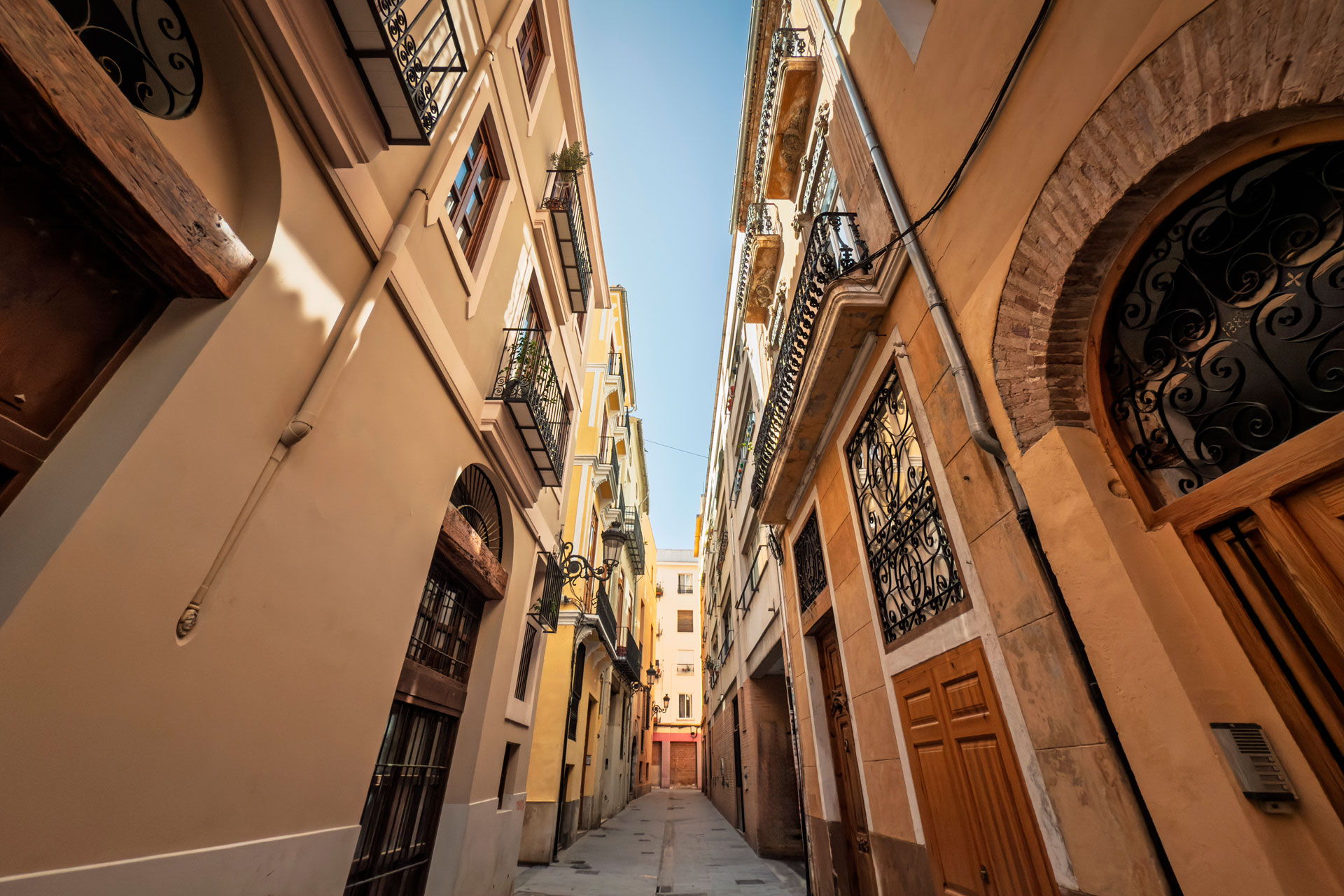
Valencia City is lively. In some areas, that means conversation outside late in the evening, scooters, deliveries, cafés, neighbours on balconies and local celebrations. A street that seems quiet during a short viewing can sound very different at night or on a weekend.
The details matter. Which way do the bedrooms face? Is there a bar below the apartment? Are the windows well insulated? Is the home on a busy route or a quieter side street? An exterior-facing apartment may have more daylight and more street noise. An apartment facing an interior patio may be quieter but receive less natural light. Neither is automatically better; it depends on what matters to you.
The same is true of neighbourhoods. A name on a map cannot tell you everything about one street, one building or the route you will take home. We recommend walking the area at the times you expect to use it. Look at the journey to public transport, the local shops, the school route and the lighting after dark. If you cannot visit before deciding, ask for a live video walk-through that includes the entrance and street, not only the living room.
You should not have to compromise on feeling safe in order to find a home within budget. It may be reasonable to be flexible about a balcony, a renovated kitchen or being in the very centre. It is not reasonable to ignore a concern that affects your family’s comfort and confidence.
City life is one option. The suburbs are another.
Some people picture a relaxed Mediterranean lifestyle and imagine the city itself will feel spacious and quiet. Valencia has calm streets and residential areas, but it is still a dense city. Streets can be narrow, buildings can stand close together, and parking can be difficult. If you are used to a large home, a garden and quiet streets, that can take some adjustment.
But choosing Valencia does not mean you have to choose an apartment in the city centre. The surrounding towns offer a very different way of living, and there is no single “suburban” lifestyle either.
In places such as Rocafort, La Cañada, La Eliana and Godella, you might find a compact townhouse on a residential street, with neighbours and local shops nearby. A little further out, the options can include larger detached homes with gardens and pools. In established gated communities such as Santa Bárbara, families may find substantial villas, private roads and shared facilities such as tennis courts or a country club.
Those homes can offer the space, privacy and outdoor living that some families miss in the city. They can also change the shape of everyday life. You may rely more on a car, plan journeys around school and work, or find that the nearest café and supermarket are no longer just around the corner. Some areas have metro connections, but the right option depends on the exact location and your daily routine.
It is worth comparing the life each home would give you, not just the property itself. Would you rather walk to dinner and live with less space, or have a garden and spend more time travelling? Would your children use the pool and club regularly, or would those facilities matter less than being close to school and friends? There is no better answer for everyone.
Our guide to family relocation in Valencia explores different neighbourhood and suburban options. We also help families compare city and suburban living as part of our family relocation service, taking schools, housing, transport and everyday life into account.
Language is more than a practical detail
You can move to Valencia without speaking fluent Spanish. Many people do. But daily life tends to feel easier as your Spanish improves.
English can help in international schools, some businesses and expat circles. It will not be available in every interaction with a landlord, school, local office or neighbour. In the Valencian Community, you will also encounter Valencian in schools, public life and local culture. You do not need to master both languages before you arrive. It helps to come curious, learn useful Spanish and accept that understanding local references takes time.
Some newcomers quickly build a social circle through work, school or shared interests. Others find that their friendships remain mostly international for longer than they expected. Local friendships can take time to develop, just as they can anywhere. Learning the language and taking part in regular neighbourhood life make a difference, but there is no shortcut that guarantees you will feel at home immediately.
It is worth asking yourself what kind of community you want. Do you want your children to attend a local school and become immersed in Spanish? Would an international school make more sense for their age or educational continuity? Do you want an international social network, local connections, or a mix? There is no wrong answer. The important thing is to make it consciously.
Schedules and services may work differently
You may need to adjust to later meal times, shops that close during the day, and administrative appointments that require patience and preparation. Some services that you expect to arrange quickly may involve several steps. The pace can feel frustrating when you are also dealing with a move, paperwork and children.
A little preparation makes these situations easier. Understand what can be arranged before arrival, what needs a Spanish address, and what depends on your residency or employment situation. Non-EU residents should get advice specific to their visa, tax and healthcare circumstances. These questions cannot be answered safely with a general checklist, because the right answer depends on the person and the route they are taking.
Our relocation services for expats help clients organise the practical side of a move and coordinate with qualified specialists where needed. The purpose is to make the process clearer, not to pretend every administrative step will be immediate.
Before you decide, visit as a resident
If you can, spend time in Valencia before committing to a move. A holiday is useful, but it will not show you everything. Try to visit outside the busiest tourist areas and imagine an ordinary week. Walk the neighbourhoods you are considering in the morning and evening. Use public transport. Shop for groceries. Look at homes, not just streets and restaurants.
If you have children, think about the school journey and what the first months might feel like for them. If you work from home, consider noise, space and internet. If you are used to having a car, try a few everyday routes without one. These small tests can reveal more than a long list of online opinions.
It also helps to make two lists: the things you genuinely need for a good life, and the things you would like but could live without. The distinction can help you choose a neighbourhood and home without either expecting Valencia to reproduce your old life or feeling that you must adapt to everything without question.
Arrive with curiosity, and with a plan
Valencia can offer a more walkable daily routine, time outdoors, neighbourhood life and a family-friendly culture. It can also mean less space, more street noise, shared walls, a different food landscape and the effort of building a life in another language.
Those are not hidden catches. They are part of the decision. The move is more likely to feel right when you have considered them before you arrive, chosen a home that fits your real routine and understood which parts of daily life you are ready to change.
We have helped many families, couples and individuals make that transition. Most of our clients choose to stay, but our role is not to persuade everyone that Valencia is right for them. It is to help you work out whether it fits your priorities, and if it does, prepare for the move with a clear view of what to expect.
If Valencia is on your mind, book a free 15-minute consultation. Tell us what you are hoping to find and what concerns you. We will listen, discuss the practical realities and give you an honest view of how we may be able to help. You can also read about our relocation support in Valencia.